Slow Cooker Beef Stew

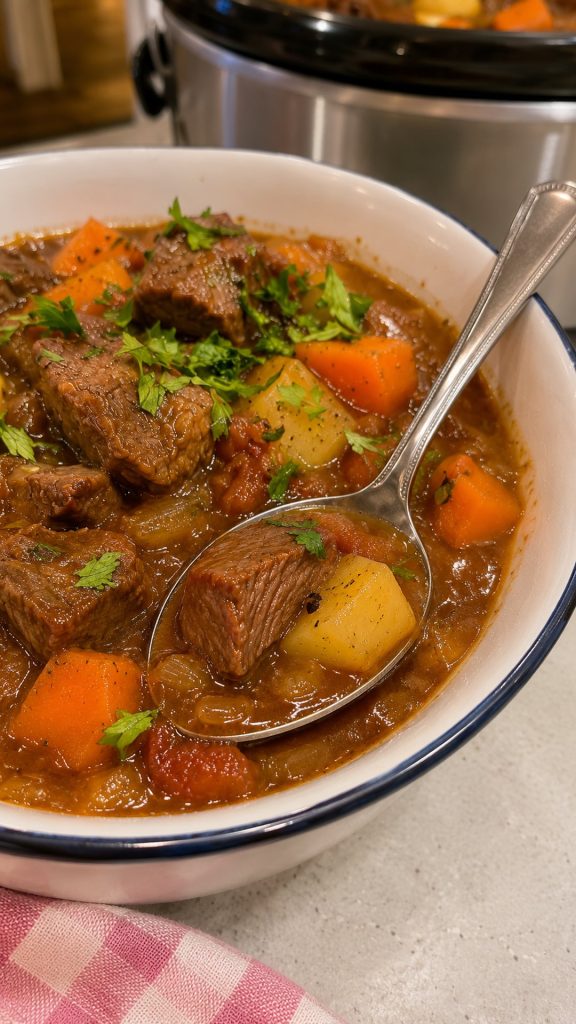
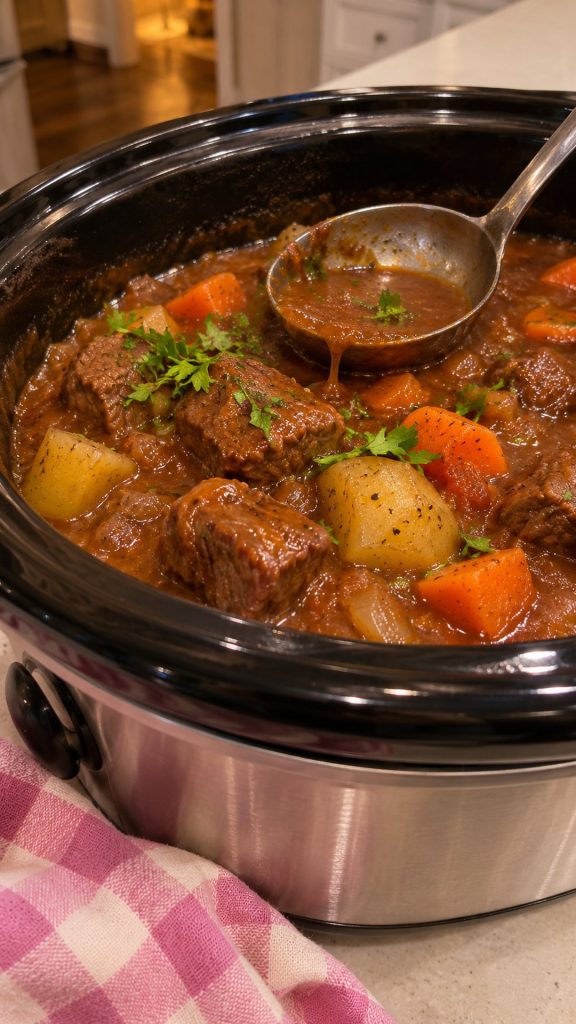
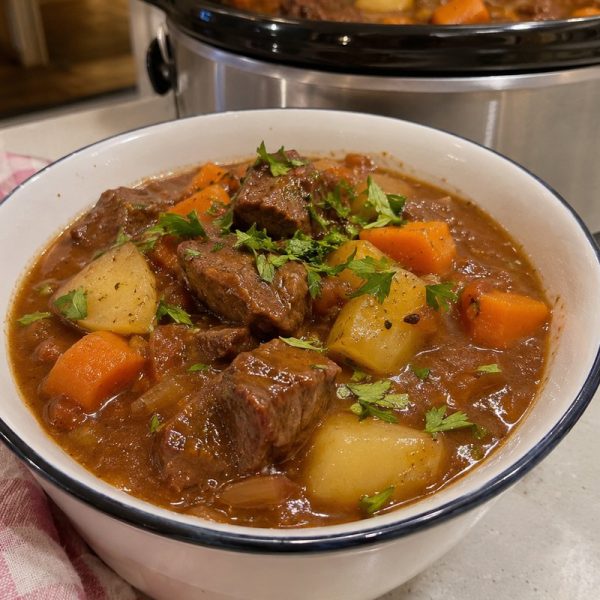
This slow cooker beef stew is the kind of dinner that makes the whole house smell like a cozy Sunday: chunks of beef chuck simmered for hours with potatoes, carrots, onion and garlic in a rich, savory gravy until the meat is tender enough to cut with a spoon. It is classic, hearty comfort food, and the slow cooker does nearly all of the work while you get on with your day.
The method is simple. Toss the beef in seasoned flour, give it a quick sear for deeper flavor, then layer it over the vegetables with broth, tomato paste and herbs. By dinnertime the flour has slowly thickened the broth into a glossy gravy, and an optional cornstarch finish makes it as thick as you like. One pot, a big batch for leftovers and very little cleanup. It is an easy beef stew for the crockpot, and the sections below cover how long to cook it on LOW or HIGH and how to thicken the gravy if it is thinner than you like.
If you love a slow-braised beef dinner, the crockpot pot roast uses the same low-and-slow idea with a whole chuck roast.
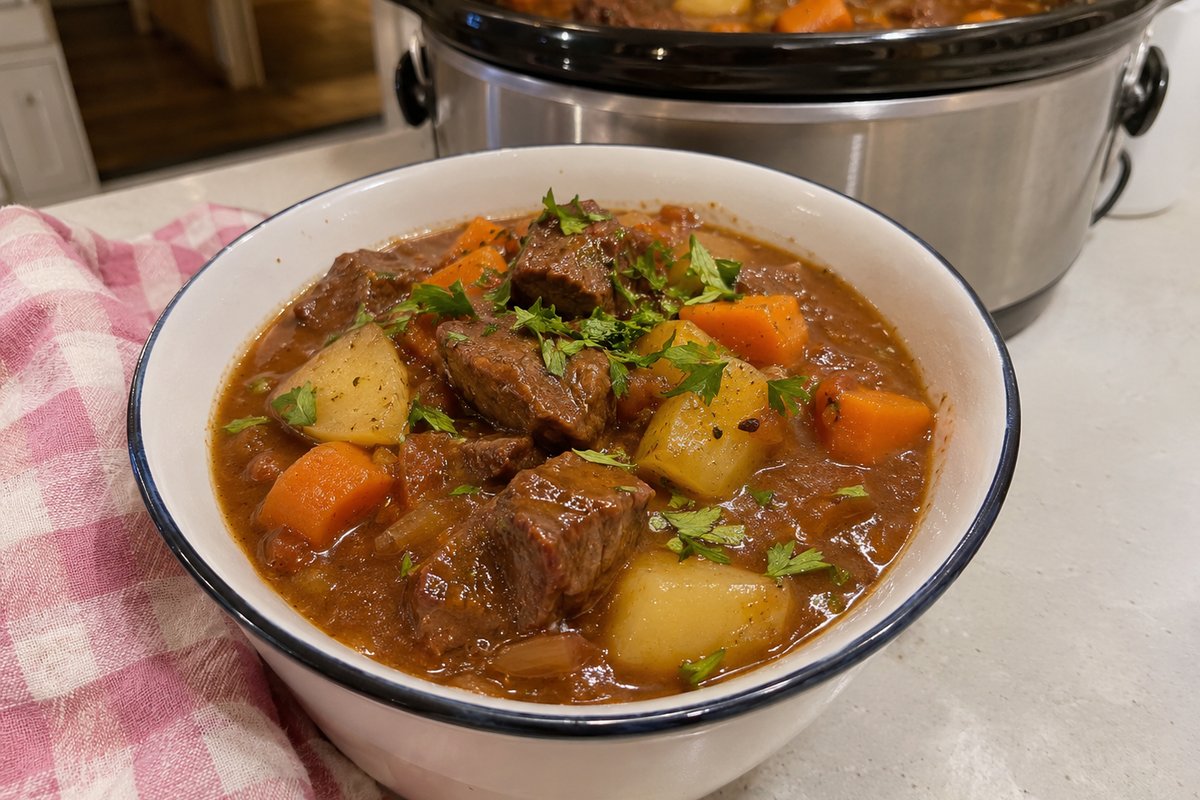
Why You’ll Love This Slow Cooker Beef Stew
Fork-tender beef every time. Chuck is full of connective tissue that turns tough with fast cooking but melts into soft, juicy bites after hours of gentle heat. That slow, steady heat is exactly what a slow cooker does best.
A full meal in one pot. Meat, potatoes and vegetables cook together in the same gravy, so there is no side dish to make unless you want a slice of crusty bread for dipping.
Hands-off cooking. After about 25 minutes of prep, the stew needs nothing from you for 8 hours on LOW. Start it in the morning and dinner is ready when everyone gets home.
Even better the next day. Stew tastes richer after a night in the refrigerator, because the flavors have time to settle into the gravy, and it freezes well for an easy future dinner.
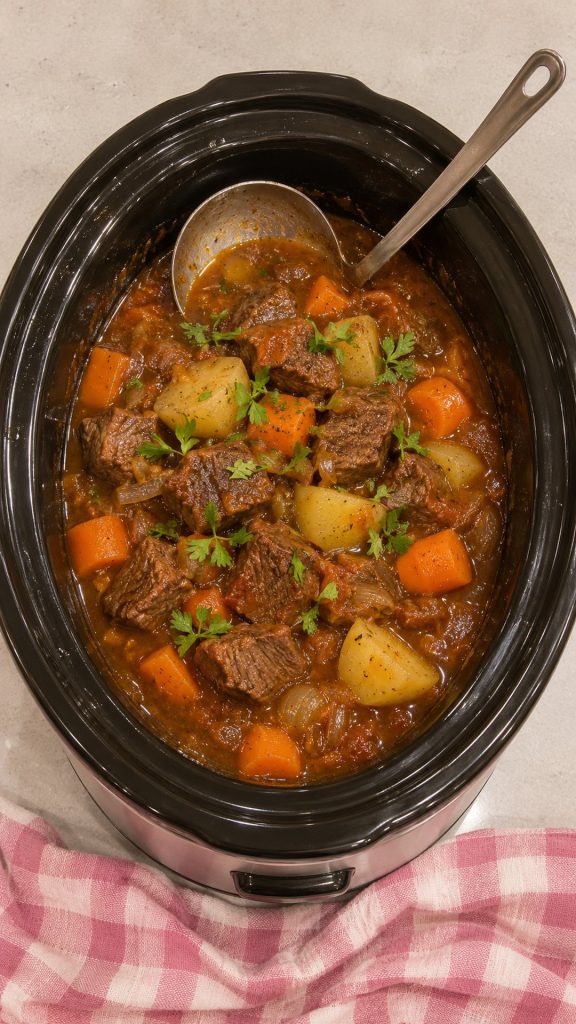
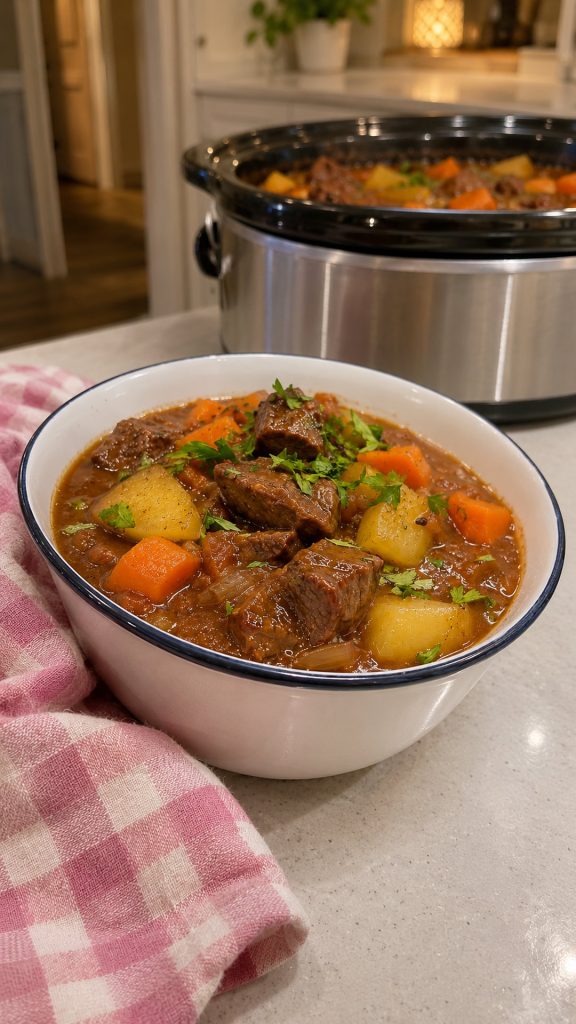
What Makes Slow Cooker Beef Stew So Easy?
A good stew usually means an afternoon of watching a pot on the stove. The slow cooker version keeps all of the flavor and drops the babysitting:
- The flour does the thickening. Coating the beef in seasoned flour before it goes in means the broth thickens gradually as it cooks. There is no roux to stir and no separate gravy to make at the end.
- Browning is quick and optional. Searing the floured beef in two batches takes about 10 minutes and adds a deeper, roasted flavor and darker color. On a rushed morning you can skip it, and the stew will still be good, just a little lighter in taste.
- Layering cooks everything evenly. Potatoes and carrots go on the bottom, closest to the heat, and the beef sits on top. That way the dense root vegetables and the meat finish tender at about the same time.
- Low heat is forgiving. Chuck is hard to overcook on LOW. An extra 30 minutes only makes the beef softer, which is helpful on days when dinner runs late.
For equipment you need a 6-quart slow cooker, a large skillet for browning, a cutting board, a sharp knife and a ladle. An instant-read thermometer is handy, but for stew the fork test tells you most of what you need to know.
Ingredient Notes
Full measurements are in the recipe card below.
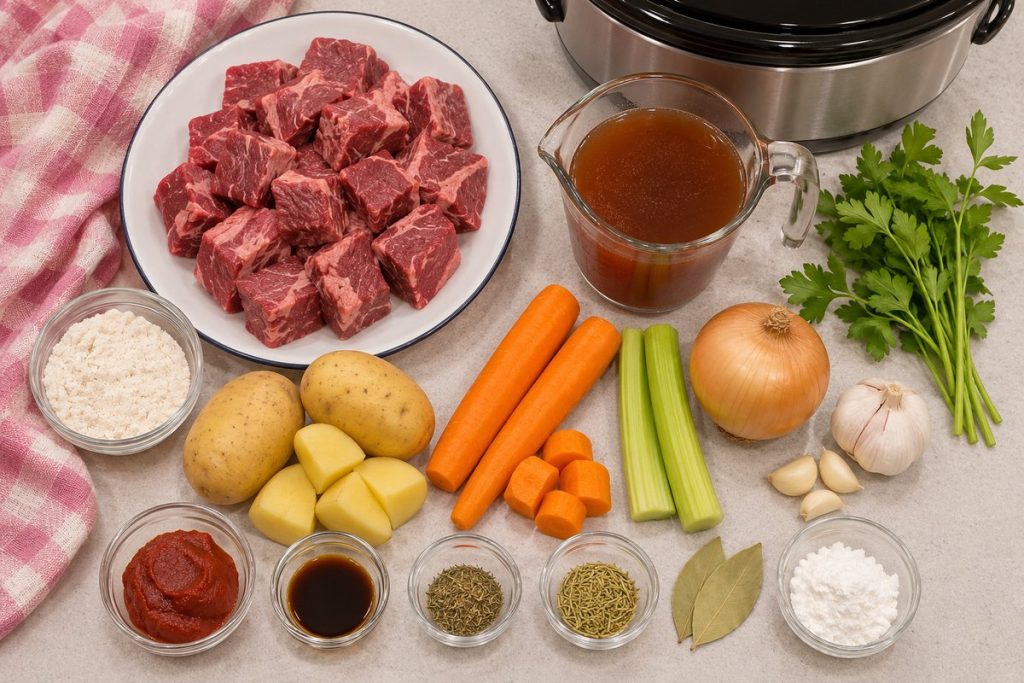
- Beef chuck: buy a chuck roast and cut it into 1 1/2-inch cubes yourself, or buy beef labeled stew meat. Cutting your own chuck gives even pieces with good marbling, while packaged stew meat can be a mix of cuts that cook at different speeds. Avoid lean cuts such as sirloin or round, which turn dry and stringy in a long braise.
- Flour, salt and pepper: all-purpose flour coats the beef, helps it brown and thickens the broth. For a gluten-free stew, skip the flour coating, thicken at the end with the cornstarch slurry and check that your Worcestershire sauce is gluten-free.
- Olive oil: for browning. Any oil with a medium-high smoke point, such as canola or avocado oil, works too.
- Yukon gold potatoes: they hold their shape and turn creamy inside. Red potatoes work as well. Russets break down more and thicken the stew, which some people prefer. Peeling is up to you.
- Carrots, celery, onion and garlic: the classic stew base. Cut the carrots into 1-inch chunks so they stay intact through the long cook instead of turning mushy.
- Low-sodium beef broth: low-sodium broth gives you control over the salt, since the Worcestershire sauce adds salt too and the flavors concentrate as the stew cooks.
- Tomato paste and Worcestershire sauce: two small additions that build a deep, savory backbone and give the gravy its rich red-brown color.
- Thyme, rosemary and bay leaves: dried herbs hold up well over many hours. Crush the rosemary between your fingers so you do not bite into whole needles, and remove the bay leaves before serving.
- Cornstarch and cold water: optional. Mixed into a slurry and stirred in at the end, they turn the gravy thick enough to coat a spoon.
- Fresh parsley: a handful of chopped parsley brightens each bowl.
Ways to Vary This Recipe
Beef stew is a flexible recipe. Keep the beef, broth and thickener the same and change the rest to suit what you have on hand:
- Add peas or green beans: stir in 1 cup of frozen peas or cut green beans during the last 15 minutes for a pop of green.
- Swap the root vegetables: replace some of the potatoes with parsnips, turnips or sweet potato, cut to the same size so everything cooks evenly.
- Mushroom beef stew: add 8 ounces of quartered cremini mushrooms with the vegetables for an earthier, meatier flavor.
- A richer gravy: stir 1 tablespoon of balsamic vinegar into the broth mixture for extra depth. If you cook with wine, replace 1 cup of the broth with dry red wine.
- Make it lighter: trim the visible fat from the chuck, skip the browning step and the oil, and use extra carrots and celery in place of some of the potatoes.
- Serve it differently: leave the potatoes out of the pot and spoon the stew over mashed potatoes or buttered egg noodles.
Step by Step Instructions
Here is the method at a glance. The recipe card below has the full ingredient amounts and every step.
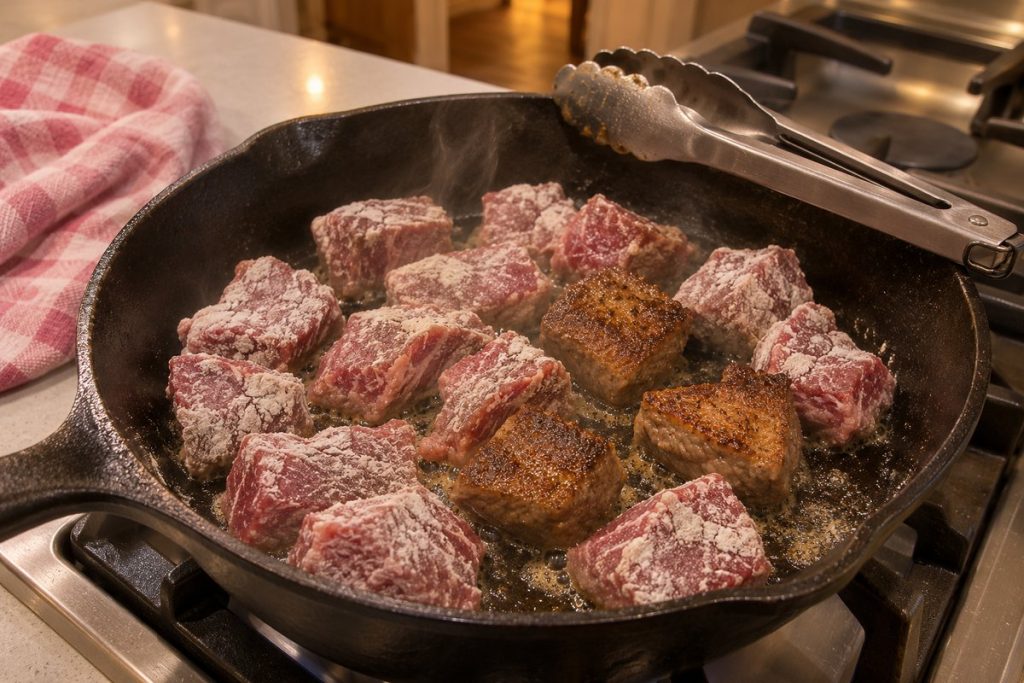
Step 1: Pat the beef dry, then toss it in a large bowl with the flour, salt and pepper until every piece is coated. Heat the oil in a large skillet over medium-high heat and brown the beef in two batches, 2 to 3 minutes per side, without crowding the pan. It does not need to cook through.
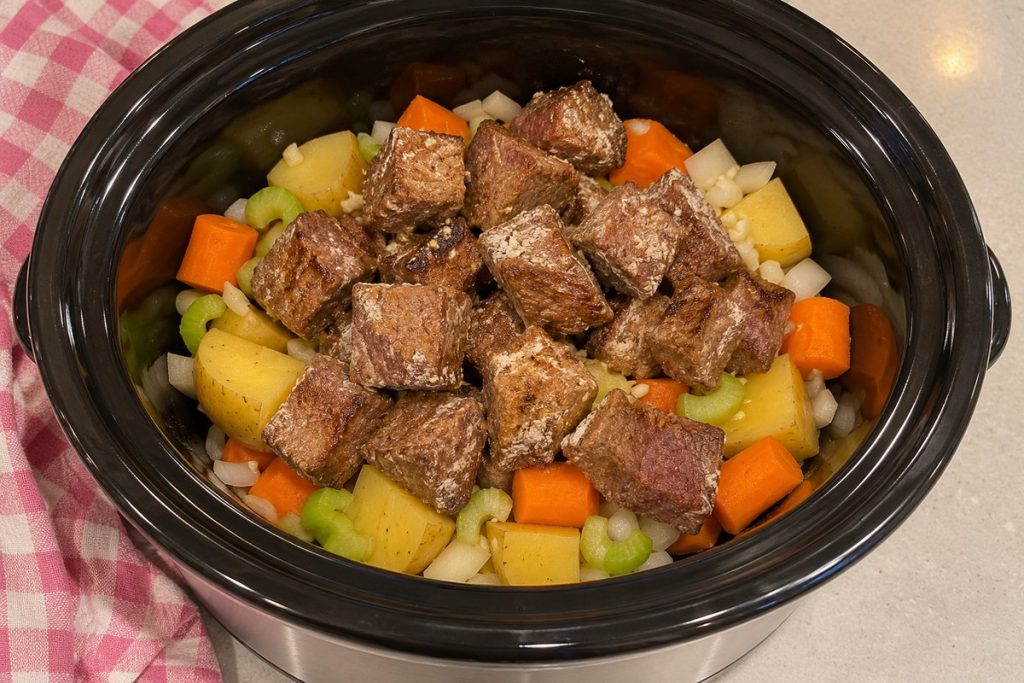
Step 2: Spread the potatoes, carrots, celery, onion and garlic over the bottom of a 6-quart slow cooker. Pile the browned beef on top, along with any flour left in the bowl.
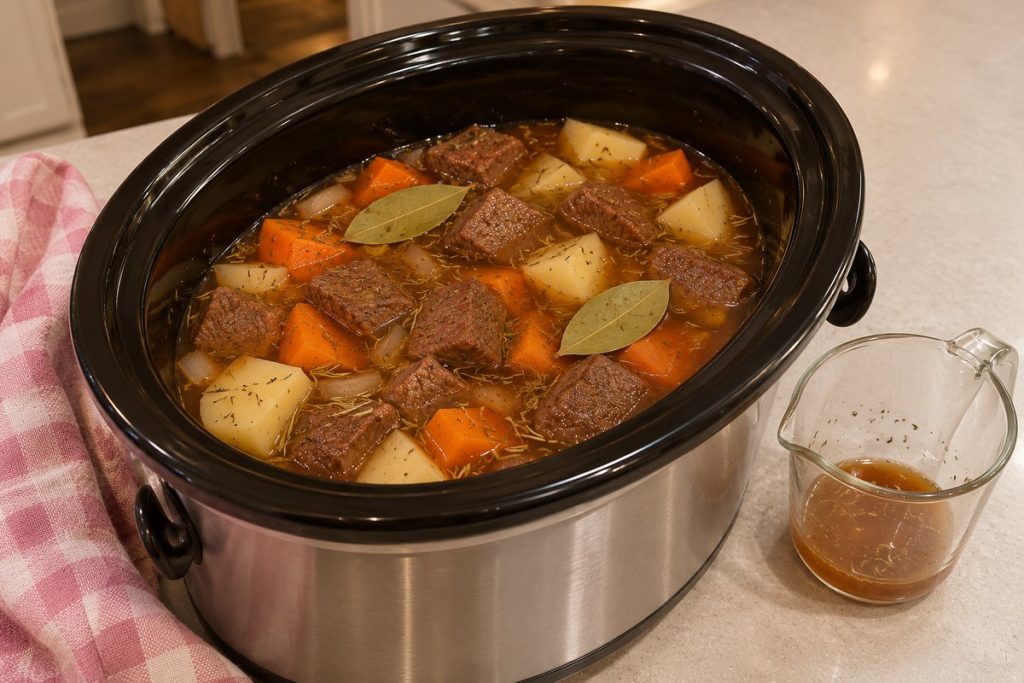
Step 3: Pour 1/2 cup of the broth into the hot skillet and scrape up the browned bits, then whisk it with the rest of the broth, the tomato paste, Worcestershire sauce, thyme and rosemary. Pour it over the beef and tuck in the bay leaves. Cover and cook on LOW for 8 to 9 hours or on HIGH for 4 to 5 hours, until the beef is fork-tender.
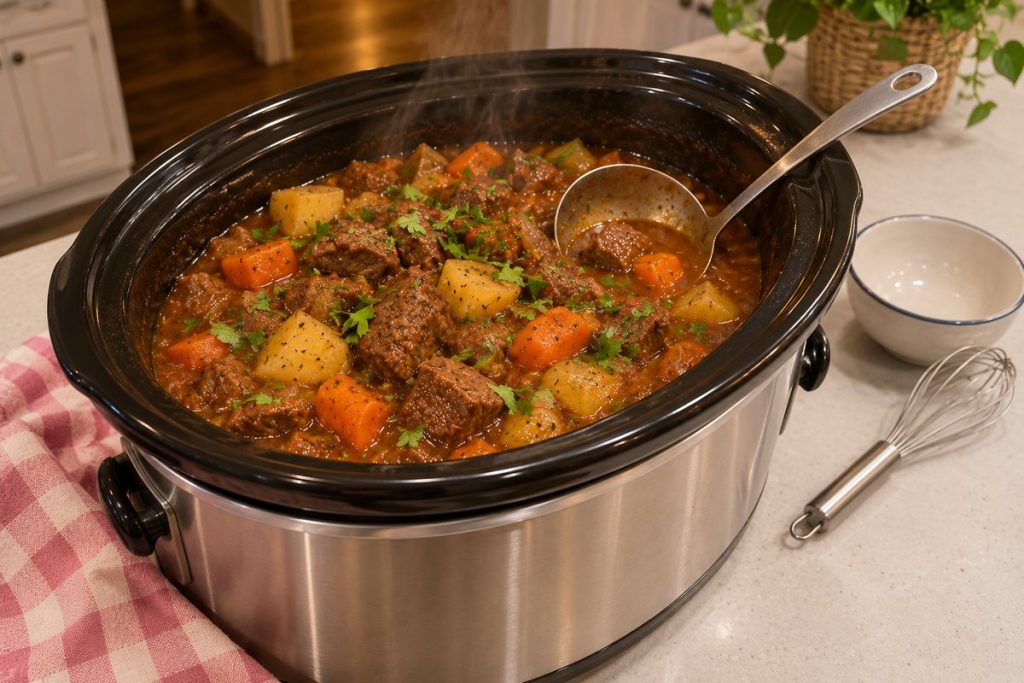
Step 4: Remove the bay leaves. For a thicker gravy, stir in the cornstarch slurry, cover and cook on HIGH for 15 to 20 minutes more. Taste, adjust the salt and pepper, and serve topped with parsley.
If the beef is still firm when the time is up, it simply needs longer. Chuck goes through a chewy stage before the connective tissue breaks down, so give it another 30 to 60 minutes and test again.
How Long to Cook Beef Stew in a Crock Pot
Beef stew is ready when the beef is fork-tender, which happens well after it is safe to eat. Chuck needs time for its connective tissue to break down, usually until it reaches about 195 to 205°F inside. These times are for thawed beef in a 6 quart slow cooker:
| Beef | LOW | HIGH |
|---|---|---|
| 1 1/2-inch chuck cubes (this recipe) | 8 to 9 hours | 4 to 5 hours |
| 1-inch packaged stew meat | 7 to 8 hours | 3 1/2 to 4 1/2 hours |
| 2-inch chunks | 9 to 10 hours | 5 to 6 hours |
LOW gives the most tender meat. HIGH works when you start later in the day, but the beef can turn a little stringier. If the meat is still chewy at the end of the range, keep cooking and check every 30 to 60 minutes.
How to Thicken Crock Pot Beef Stew
The flour on the beef already thickens the broth, so most days this comes out as a crockpot beef stew with gravy that coats a spoon. If yours is thinner than you like, there are a few easy fixes:
- Cornstarch slurry: whisk 2 tablespoons of cornstarch with 2 tablespoons of cold water, stir it in and cook on HIGH with the lid on for 15 to 20 minutes. Repeat with another tablespoon if needed.
- Mash a few potatoes: press 4 or 5 potato chunks against the side of the pot and stir. Their starch thickens the gravy with nothing extra added.
- Flour slurry: whisk 3 tablespoons of all-purpose flour into 1/3 cup of cold water until smooth, stir it in and cook on HIGH for 20 to 30 minutes so the raw flour taste cooks out.
- Take the lid off: cook uncovered on HIGH for the last 30 to 45 minutes to let some of the liquid evaporate.
- Add tomato paste: an extra tablespoon stirred in adds body and a deeper color.
Recipe Tips
- Judge tenderness, not just temperature. Beef is safe to eat at 145°F, but stew meat only turns tender once its collagen breaks down, which happens at around 195°F to 205°F after a long, gentle cook. A fork should slide into a cube with no resistance.
- Cut the pieces evenly. Cubes of about 1 1/2 inches cook at the same pace. Small scraps dry out, and very large chunks need extra time.
- Never start with frozen beef. The USDA advises thawing meat before slow cooking, because frozen meat can spend too long in the temperature danger zone. Thaw it in the refrigerator overnight.
- LOW gives the best texture. HIGH works when you are short on time, but the beef is more tender after 8 hours on LOW. Keep the lid closed, since every peek lets out heat and adds cooking time.
- Mind the fill line. A slow cooker works best between half and two-thirds full. This recipe fits a 6-quart cooker comfortably; halve it for a 4-quart cooker.
Storage and Reheating
Refrigerating: cool the stew and refrigerate it within 2 hours in airtight containers. It keeps for 3 to 4 days.
Freezing: freeze portions for up to 3 months for the best quality. Potatoes can turn a little soft and grainy after freezing, so if you plan to freeze the whole batch, you can leave them out and serve the stew over fresh mashed potatoes. Thaw overnight in the refrigerator.
Reheating: warm the stew in a covered saucepan over medium-low heat, stirring now and then and adding a splash of broth if it has thickened too much, until it reaches 165°F. The microwave works well for single bowls. Do not reheat cold stew in the slow cooker, because it warms food too slowly to be safe.
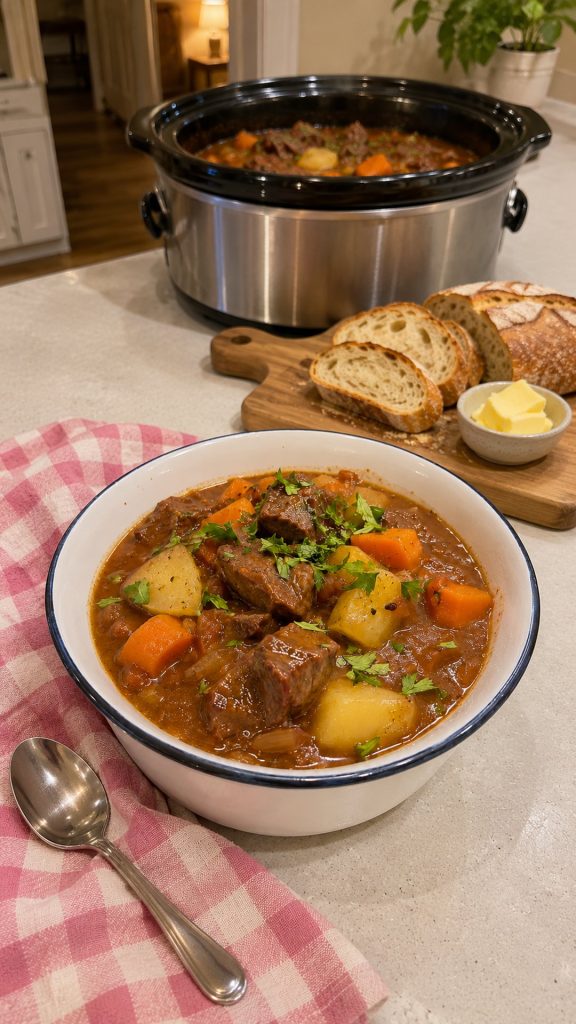
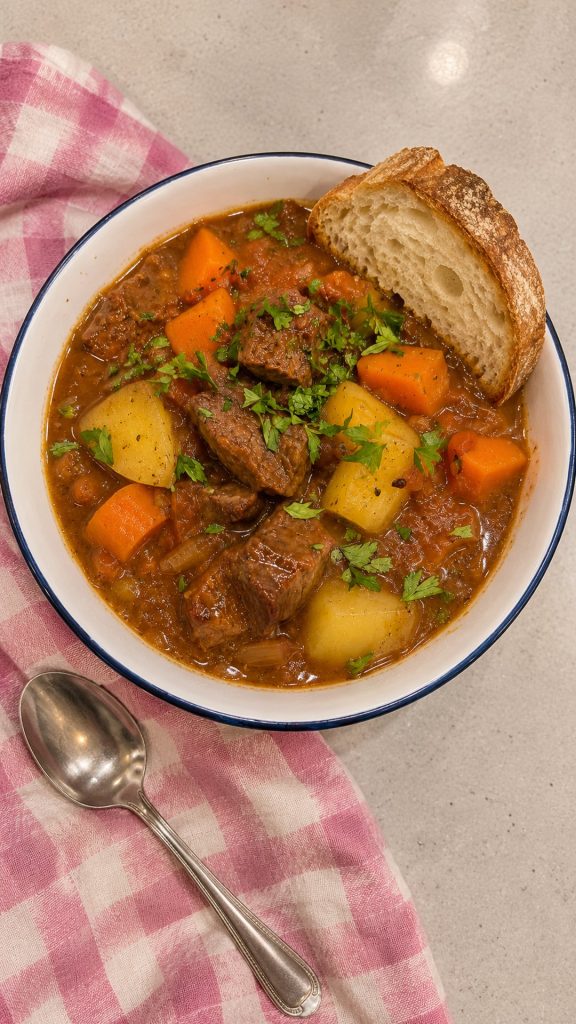
Slow Cooker Beef Stew FAQ
Do you have to brown beef before putting it in a slow cooker?
No, it is safe either way. Browning adds deeper flavor and color, which is why this recipe recommends it, but on a busy morning the floured raw beef can go straight into the pot.
Why is my slow cooker beef stew meat tough?
Usually it needs more time, or the cut was too lean. Chuck turns tender only after its connective tissue breaks down, so keep cooking and check every 30 to 60 minutes. Lean cuts such as round stay dry however long they cook.
Can I make crockpot beef stew with onion soup mix?
Yes, it is a handy shortcut. Whisk one 1-ounce packet of dry onion soup mix into the broth and leave out the salt, because the mix is already salty. Keep the tomato paste and Worcestershire sauce, then taste at the end before adding any more seasoning.
Can I put raw potatoes and carrots in the slow cooker with the beef?
Yes. Raw vegetables go in at the start. Place them on the bottom and cut them into large chunks so they turn tender without falling apart.
More Easy Crockpot Dinners
- Slow Cooker Pot Roast
- Easy Crockpot Chili
- Crockpot Potato Soup
- Crockpot Lasagna Soup
- Crockpot Chicken and Dumplings
- Easy beef dinners
- Cozy soups and stews
Looking for more cozy dinners? Save this recipe with the Pin it button at the top so it is easy to find on the next cold evening, and browse more soups and stews.
- Prep
- 25 min
- Cook
- 8 hrs
- Total
- 8 hrs 25 min
- Servings
- 6 servings (about 1 3/4 cups each)
- Calories
- 500
Slow cooker: LOW 8 to 9 hours or HIGH 4 to 5 hours, plus 15 to 20 minutes on HIGH to thicken (optional).
Ingredients
Beef
Vegetables
Broth
To finish
Instructions
- Coat the beef. Pat the beef dry with paper towels. Toss it in a large bowl with the flour, salt and pepper until every piece is coated.
- Brown the beef. Heat the oil in a large skillet over medium-high heat. Brown the beef in two batches, 2 to 3 minutes per side, without crowding the pan. It does not need to cook through. (Optional but recommended for flavor.)
- Layer the slow cooker. Spread the potatoes, carrots, celery, onion and garlic in the bottom of a 6 quart slow cooker. Put the browned beef on top, with any flour left in the bowl.
- Add the broth. Pour 1/2 cup of the broth into the hot skillet and scrape up the browned bits. Whisk it with the remaining broth, tomato paste, Worcestershire sauce, thyme and rosemary, pour it over the beef and tuck in the bay leaves.
- Slow cook. Cover and cook on LOW for 8 to 9 hours or on HIGH for 4 to 5 hours, until the beef is fork-tender (around 195°F to 205°F inside) and the vegetables are soft.
- Thicken and serve. Remove the bay leaves. For a thicker gravy, stir in the cornstarch slurry, cover and cook on HIGH for 15 to 20 minutes. Season to taste with salt and pepper and serve sprinkled with parsley.
Notes
- Use fresh or fully thawed beef only. Do not put frozen meat in a slow cooker; thaw it in the refrigerator overnight.
- No time to brown? Add the floured raw beef straight to the slow cooker. The stew will be a little lighter in color and flavor.
- Gluten-free: skip the flour coating, use a gluten-free Worcestershire sauce and thicken with the cornstarch slurry.
- For a 4 quart slow cooker, halve the recipe.
- Leftovers keep in the refrigerator for 3 to 4 days or in the freezer for up to 3 months. Reheat to 165°F on the stove or in the microwave.
- Nutrition is an estimate based on beef chuck and includes the browning oil and cornstarch, but not bread.
Did you make this recipe? Leave a rating and a comment below. It helps other cooks too.
Rate this recipe
Free Christmas Appetizer Recipe Cards
8 party recipes on printable cards, with photos and a link to each full recipe. Enter your email and the PDF is yours.
You are in! Your recipe cards are ready.
Download the PDFPrint it on US Letter paper. Tap any recipe name in the PDF to open the full recipe.


Ratings and comments